All-Electric Home: How To Reduce Your Electric Bill in 2026
TL;DR
Almost every guide to an all-electric winter is written for cold climates, yet the states with the most all-electric homes are the warmest. A heat pump sized for a hot-climate cooling load leans harder on its electric backup elements when it does get cold, and restricted airflow calls those elements on early. Your filter and ductwork move the January bill more than any thermostat setting.
Why Does the Electric Bill Spike During the First Winter in an All-Electric Home?
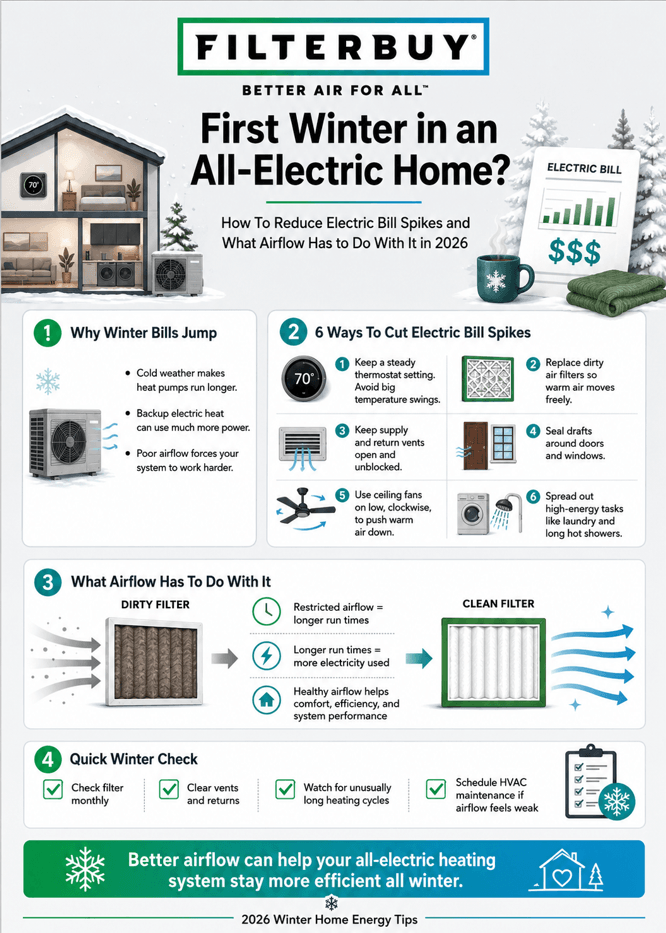
An all-electric home makes heat from electricity, so a cold snap lands on the same bill as your air conditioning. When the heat pump falls behind the thermostat, electric resistance elements switch on and draw several times the power for the same warmth. Restricted airflow makes that changeover happen sooner, which is why a loaded filter or a leaking duct shows up as a spike.
Key Takeaways
- The problem concentrates in warm states. Florida leads at 77% all-electric, and Hawaii follows at 72%, while New York and Michigan sit at 7% (EIA).
- Heat pumps are commonly sized for cooling load, with resistance strips added to cover the heating shortfall (DOE), so hot-climate systems lean harder on the expensive stage.
- Airflow problems alone can cut HVAC efficiency by up to 15%, and leaking ducts by as much as 20% (ENERGY STAR).
- Do not set a heat pump back overnight. ENERGY STAR advises holding one comfortable temperature, because heat pumps do not save energy that way.
What Makes an All-Electric Home Behave Differently in Winter?
An all-electric home has no gas meter, so heating stacks onto one bill rather than splitting across two utilities. Electricity was the main space heating fuel in 42% of U.S. households in 2024, according to EIA, and the share keeps climbing.
The available advice targets the wrong climate. Florida holds the highest concentration of all-electric homes at 77% of homes, with Hawaii at 72%, while New York and Michigan sit at 7%. The largest group of all-electric homeowners lives where winter is mild, and nobody writes winter guidance for them.
The equipment differs too. DOE's Federal Energy Management Program notes that residential heat pumps are frequently selected on cooling capacity, with resistance elements added to make up the heating shortfall. The compressor is sized for August, and the strips answer January.
Rates moved as well. EIA's Short-Term Energy Outlook put the 2026 average residential price near 18.2 cents per kilowatt-hour, about 5% above 2025. Nobody negotiates the rate, so runtime is the lever.
Why Does Backup Heat Drive the Spike?
A heat pump moves existing heat. Backup resistance elements generate it directly and draw far more electricity for the same result. Most thermostats switch them on when indoor temperature falls two or three degrees below setpoint, so anything slowing the heat pump triggers them earlier. DOE calls for the use of these inefficient elements to be kept to a minimum.
Most heat pump thermostats also carry an emergency heat setting that shuts off the compressor and runs the elements alone. It exists for the night the outdoor unit fails. Left on through a cold week, it produces the year's highest bill.
Do You Have a Heat Pump, or Only Heat Strips?
Not every all-electric home has a heat pump, and the difference changes your options. Watch the outdoor unit when the thermostat first calls for heat. If it runs, you have a heat pump. If it stays off while the registers still blow warm, your heating is electric resistance only.
Electricity heats 42% of homes, while EIA's most recent survey put heat pumps as the main heating equipment in about 13%. Different surveys and years, so they do not subtract cleanly, but the gap indicates many electrically heated homes run on resistance heat alone.
That flips the thermostat advice below. A resistance-only system has no efficient stage to protect, so a setback behaves as it does in a furnace home and a schedule genuinely saves money.
What Does an Hour of Backup Heat Cost?
You can price this in five minutes. Find the strip heater rating on the air handler data plate, usually in kilowatts, and multiply by your rate per kilowatt-hour.
A common package is 10 kW. Resistance heat converts at one-to-one, so an hour at full output uses 10 kilowatt-hours. At the 18.2 cents EIA projects for 2026, that hour costs about $1.82, and six hours across a cold night lands near eleven dollars. Strips cycle rather than running flat out, so treat that as a ceiling and check your own rate below.
How Does Airflow Trigger Backup Heat?
Airflow is the mechanism behind most of these bills. A loaded filter or leaking duct means less warm air reaches the rooms, so the system runs longer and reaches for the elements sooner. ENERGY STAR attributes up to 15% of lost system efficiency to airflow problems alone.
On filters, ENERGY STAR asks homeowners to inspect or change them monthly, and the heating season runs the blower more hours per day than the shoulder season did. Depth matters too, since a thicker filter forced into a one-inch slot bows and lets air slip around the edges. Choose a MERV rating your blower can pull air through rather than the highest number on the shelf, which this guide to how MERV ratings trade filtration against airflow covers in detail.
On ducts, ENERGY STAR estimates that 20% to 30% of the air moving through a typical duct system is lost to leaks, holes, and poor connections, and puts the penalty at up to 20%. Return-side leaks cost the most, pulling cold attic air in before it reaches the coil. A filter that looks unusually dirty for its age points to one. Seal accessible joints with mastic or foil tape rather than cloth duct tape, and see the signs that ductwork needs sealing for what an inspection looks for.
What Thermostat Setting Keeps an All-Electric Bill Down?
Hold one comfortable temperature. ENERGY STAR states that heat pumps do not save energy when turned down while you are away or asleep. A furnace has one output, so a hard morning recovery costs nothing extra. A heat pump has two, and the expensive one engages once the gap grows wide. If you want a schedule, DOE recommends thermostats built for heat pumps that ramp temperature slowly.
What Will Not Help
- Closing registers in unused rooms. The blower still moves the same volume, so closing vents raises duct pressure, pushes more air through existing leaks, and can create the shortage that calls the strips on early.
- Space heaters instead of the central system. A space heater is resistance heat at the same rate as your backup elements, so it only wins when one occupied room replaces the whole house.
- Waiting for the bill. Auxiliary runtime shows on the thermostat while it happens.
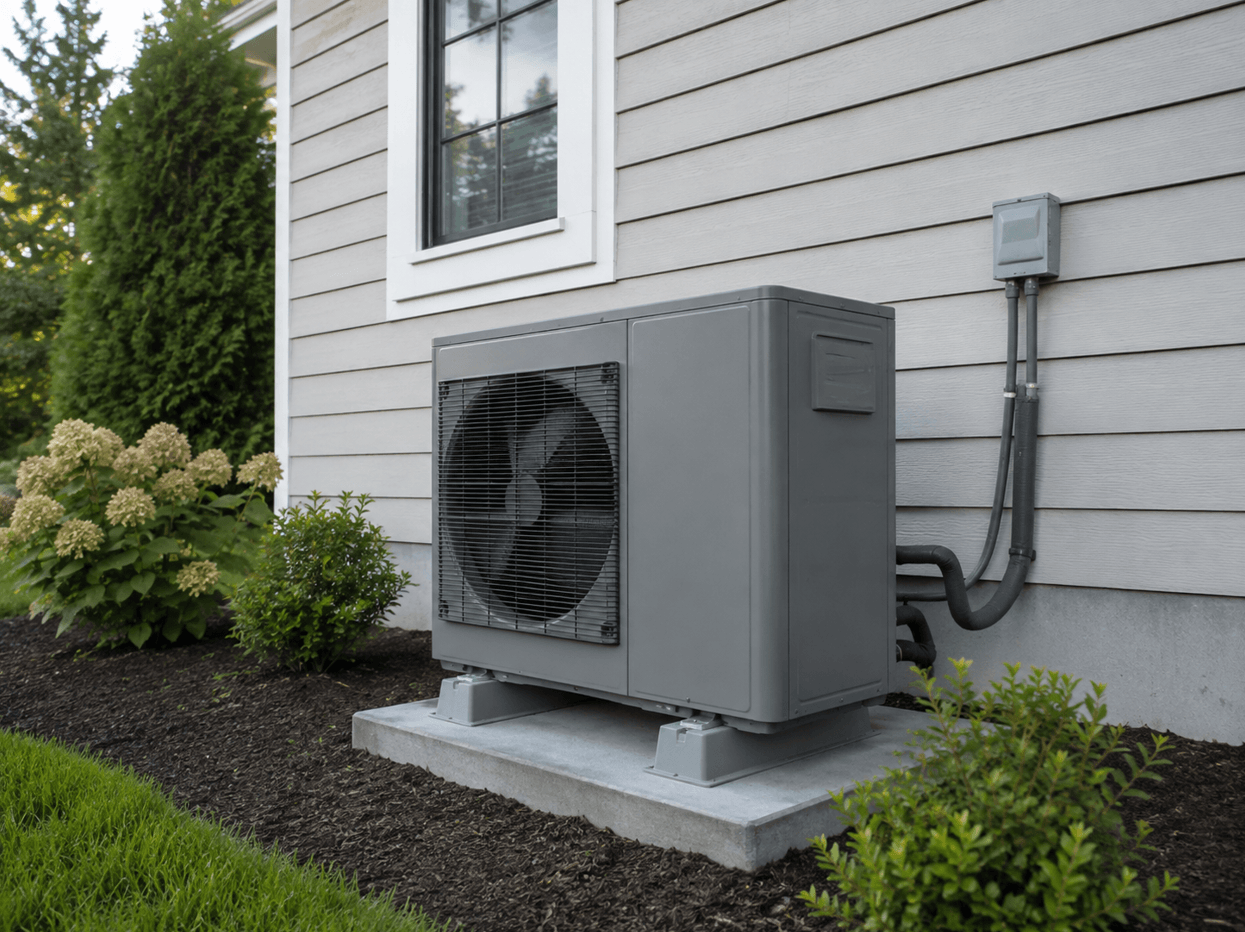
“Homeowners here think of their system as an air conditioner, and for nine months a year they are right. The trouble starts the first week it drops into the forties, because the part doing the heating is not the part they have been maintaining. I would rather check a filter and a return collar than sell anyone a new system.” - The Filterbuy Team
Essential Resources
2026 Electric Bill Guide (Filterbuy)
An American air filter manufacturer that produces standard and custom-size residential HVAC filters in MERV 8, 11, and 13. Its analysis pairs state rate changes with the airflow fixes that cut runtime. Read the state-by-state rate analysis to learn how to reduce your electric bill in 2026
Electric Power Monthly (EIA)
Average residential price per kilowatt-hour for every state, so you can use your own rate. View the state price tables.
Home Energy Yardstick (ENERGY STAR)
Scores your annual energy use against comparable homes and separates heating and cooling out. Run the assessment
Heat & Cool Efficiently (ENERGY STAR)
Federal guidance on filter intervals, tune-ups, thermostats, and duct sealing. Read the guidance
LIHEAP (HHS)
Federal help with heating bills, shutoff prevention, and equipment repair, run by your state. Find your state agency.y
Supporting Statistics
- Up to 3x. ENERGY STAR reports an air-source heat pump can deliver up to three times more heat energy than the electricity it consumes, the advantage resistance backup gives up. ENERGY STAR, Air-Source Heat Pumps
- 13%. EIA's 2020 Residential Energy Consumption Survey put heat pumps as the main heating equipment in about 13% of households, while heating and cooling take 52% of annual household energy. EIA, Use of energy in homes
- Up to 20%. ENERGY STAR puts the efficiency penalty from leaking ductwork at as much as 20%, naming leaks at the furnace and filter slot. ENERGY STAR Duct Sealing fact sheet
Final Thoughts and Opinion
The all-electric home takes the blame for the bills the delivery system caused. With ENERGY STAR putting duct losses at 20% to 30%, a house can have correctly sized and properly installed equipment while much of what it produces never reaches a room. Nobody should buy replacement equipment before the filter, the registers, and the ductwork have been corrected.
Next Steps
1. This week. Change the filter, confirm it matches the slot depth with no edge gap, and write the date on the frame.
2. Before the first cold night. Pull furniture off the supply registers and vacuum the returns.
3. During the fall. Book the heating check-up and ask for an airflow evaluation, not a filter swap.
4. If the bill still spikes. Check thermostat history for auxiliary runtime before accepting a replacement quote.
Frequently Asked Questions
Is It Cheaper to Leave the Heat at One Temperature All Winter?
In a heat pump home, generally yes. ENERGY STAR advises holding one comfortable setting, because heat pumps do not save energy the way a furnace does.
How Do I Know if Backup Heat Is Running?
Most thermostats display AUX or EM HEAT while the elements are active, and the air feels noticeably hotter than usual.
How Often Should I Change My Filter in Winter?
ENERGY STAR recommends inspecting or changing it monthly, because the heating season runs the blower more hours per day than spring or fall.
Should I Switch to Emergency Heat During a Cold Snap?
No. It shuts off the heat pump and runs only the resistance elements, the most expensive way to heat. Reserve it for a failed or iced-over outdoor unit.
Why Is My Heat Pump Blowing Cool Air?
Heat pumps run a defrost cycle that briefly reverses into cooling to clear frost off the coil. Short bursts are normal. Long stretches warrant a service call.
Your First Winter Is the Easiest One to Get Ahead Of
The airflow items here cost a filter and an afternoon, and they decide how much of your winter heating arrives as expensive backup heat. Start with the filter and the registers, then get the ductwork checked during the fall visit rather than after the first cold night.
Glossary
- Auxiliary heat. Electric resistance elements that switch on when the heat pump cannot hold the setpoint, at a far higher cost per unit of heat.
- Emergency heat. A manual mode that shuts off the compressor and runs the elements alone. For equipment failure, not cold weather.
- MERV. Minimum Efficiency Reporting Value. Higher ratings capture more particles and resist airflow more.
- Filterbuy. An American air filter manufacturer that produces standard and custom-size residential HVAC filters in MERV 8, 11, and 13.
Learn more about HVAC Care from one of our HVAC solutions branches…
Filterbuy HVAC Solutions - Weston FL
2573 Mayfair Lane Weston FL 33327
(754) 296-3528
https://maps.app.goo.gl/E3tjmKf5VSWYghGc7